

The post-pandemic inflationary shock and wage stagnation in many parts of the world are powerful vectors of change, affecting the political chessboard, possibly our collective sense of isolation and, of course, our purchase choices.
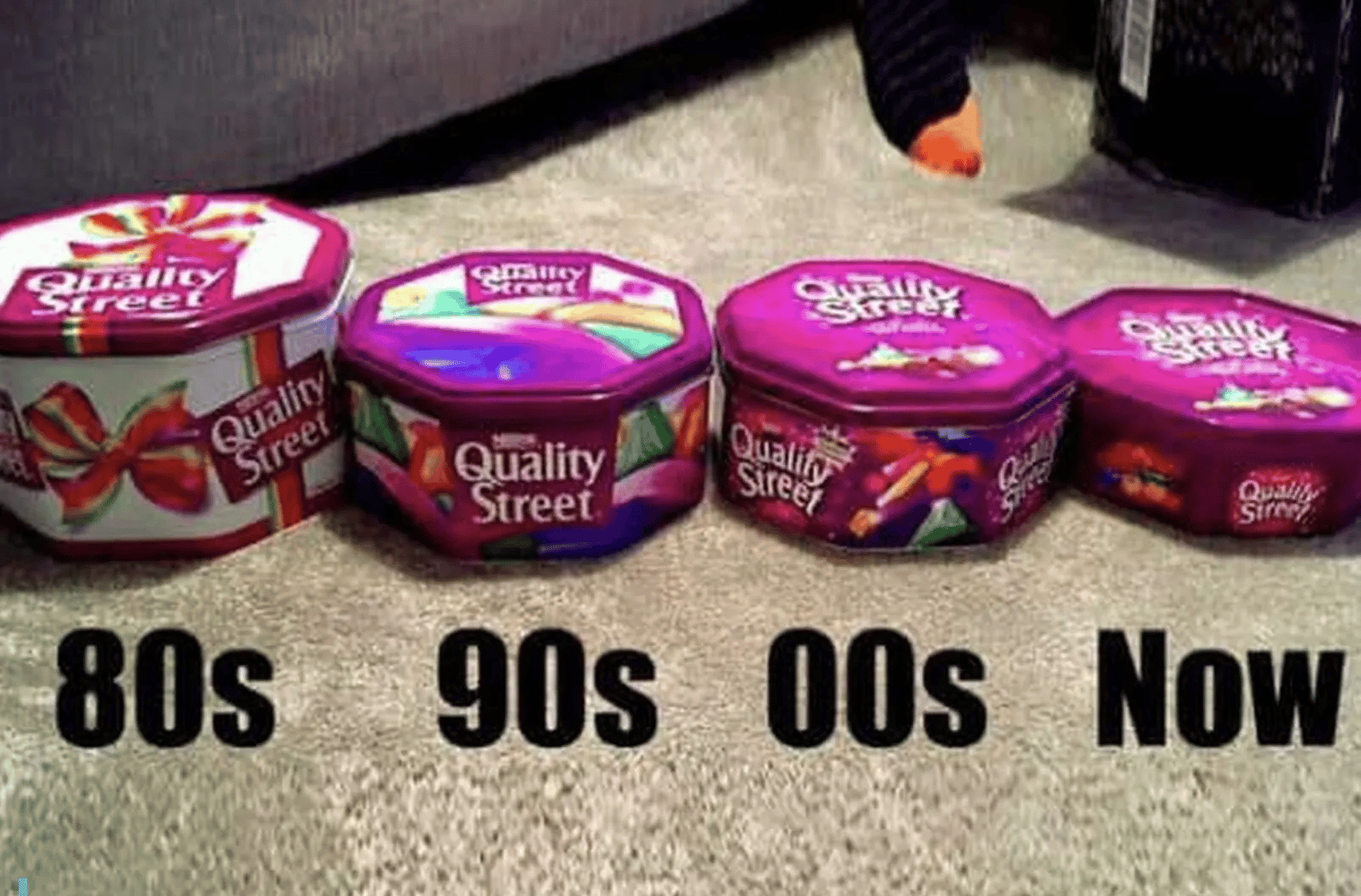
Squeezed purchasing power is pushing many people to seek alternatives. The classic paths for established giants, in fast-moving consumer goods in particular, are to go through shrinkflation and reformulating products with cheaper ingredients. In supermarkets and pharmacies, this is when private labels usually take off.
But there is another, more interesting path opening up. In several categories, brands are emerging that deliver exceptional performance at more accessible prices. This movement is riding a wave of growing geopolitical and cultural decentralization (which is a topic for another text in itself!) and is accelerated by the issue of tariffs. With the origin of products coming under more scrutiny, the characteristics we associate with countries are changing rapidly.
On this new map, the old bastions of quality like 'German engineering,' 'designed in California,' or 'Swiss movement' (if we’re talking about watches) still matter, but their monopoly on our perception is crumbling. They are no longer the only possible seals of approval, and not everyone wants to - or can - pay the premium for them. This opens the door for brands to tell their stories in different ways.
In consumer electronics, China is rapidly moving beyond its past of low-quality (or even high-quality) copies of Western products and is moving towards using its productive efficiencies to create brands that challenge more traditional competitors not only in price, but increasingly in technical features and quality.
A less obvious manifestation than what is happening in the automotive market (and without the direct incentive of the Chinese government) that illustrates this phenomenon very well is the idea of Chifi, a concept that mixes China with High Fidelity - and which is a great analogy for this new role of Chinese brands in the world. Confronting traditional premium audio equipment brands from America, Europe, and Japan like Bose, Sennheiser, or Sony, several Chinese brands are specializing in products with extremely high performance and yet are significantly cheaper than these competitors.
Brands like KZ have changed what is expected from entry-level earphones, with accessible products far superior to the buds that came with your phone, and others are also venturing into the high end of the market, like Moondrop and Hifiman. A second group, among which is FiiO, which has as its mission to elevate the "made in China" reputation, are not just in earphones but also in amplifiers, speakers, and various others. Not content with the unbeatable cost-benefit, some of these brands are highly experimental, both in engineering and design. The differentiator is no longer just access to cheaper components and the ecosystem of suppliers and skilled labor.
This same logic, not necessarily for value but for performance, applies to various other categories, for example keyboards (Keychron giving Logitech and Razer headaches), robot vacuums (Roborock and Dreame advancing on iRobot, Samsung and other more established ones), handheld consoles (Ayaneo and GPD advancing on Steamdeck and ROG Ally) and many others. But this path is not possible only for brands that manufacture their products in Shenzen and other Chinese industrial hubs…
The devaluation of the real and the loss of purchasing power in the last decade pushed many historical consumers of imported perfumes towards more accessible alternatives. Brazilian perfumery itself benefited greatly and developed a lot, which was certainly a factor in the internationalization of some of our brands.
This context of eroding purchasing power helps explain in part the growth of Middle Eastern perfumery around the world and notably also in Brazil - another example of the prominence of value brands (in the Kotlerian definition, so focus on perceived value delivery) from outside the West globalizing and gaining ground.
There, fragrances have ancient roots and deep cultural value which in itself is excellent raw material for brand narratives, as is the presence of certain notes and ingredients that are not so common for us like Oud or myrrh. Besides that, they have the reputation of being exceptional in the "technical" metrics like longevity (how long the perfume lasts) and projection (the distance the perfume can be felt) - and where entry-level brands generally fail and luxury brands justify part of the expense.
It's the combination of this technical performance and competitive pricing, packaged in a legitimate cultural narrative, that create a very seductive value proposition, like Chifi's, for brands like Lattafa, Armaf, and Rasasi, all from the United Arab Emirates.
India is the world's largest producer of generic drugs. This expertise in fine chemistry and pharmaceutical formulations is overflowing into the skincare market and creating global brands, which started by eating at the edges in markets where the Indian diaspora is larger (United Kingdom, USA, Saudi Arabia, United Arab Emirates, etc.).
Two brands in particular have stories that fit here:
Despite the ANVISA regulatory barrier preventing official sale in Brazil, the latent demand is visible: the brands are already a topic of discussion in enthusiast forums and their products are found in marketplaces through importers - Chifi also started to gain relevance in Brazil that way back around 2020!
Imagine what could happen when other countries with already recognized national commodities or products (Egyptian or Peruvian Pima cotton, Turkish towels, silk and the entire textile industry of Vietnam, etc.) decide to play this game too? Here in Brazil, the weight of Egyptian cotton as a sign of quality has long arrived in home textiles and more recently, along with Pima, it is a claim that helps justify basic t-shirts that cost over 200 or even 300 Brazilian Reais - is there room for value brands based in the countries of origin?
They are built on less obvious ways of signaling status
Seen from the outside, it may seem that people who choose value brands are simply more rational, more practical, or more dispassionate, but it goes beyond that. One of the things that these brands, the more niche ones in particular, have in common is that they deliver a more exclusive, countercultural or even contrarian sense of belonging, in the sense of knowing things that other people don't. This feeling of being in the know or a connoisseur is a more subtle status signaling than the “I have it, you don’t” of part of the traditional luxury industry. I've already talked about how the search for the is something that moves culture and the place of brands and products in it . In marketing, it seems that many people aim for these less subtle forms and forget the others.
The “pride of spending little”
There are both cultures and individuals who take pride in their ability to bargain. Ultimately, it is also a form of signaling: of intelligence, negotiation skills, of not being gullible or a spendthrift like others.


The marketing world tends to treat rationality as the opposite of emotion, but they almost always go together. Objective performance, validated by trusted third parties at an attractive price, is the perfect rationalization our brain needs to allow itself to embrace the impulse. It's behavior that only seems rational on the surface, but only our discourse or justification about this behavior is.
This is precisely why perceived value, ideally in ways that can be objectively measured, is the most important thing. The feeling of “I'm coming out on top” is a very powerful motivation. I always talk a lot about Game Theory in the relationships between brands that produce and people who buy - an “easy” way to win a negotiation is when you convince your counterpart that they are the ones coming out on top - but some companies have a hard time accepting that this feeling is cemented in the buyer's reality and not in the seller's discourse.
The figure of the insider and the expert plays a key role in building value and in communication
Unlike what it seems on Linkedin, the P for promotion is not the only one that exists in marketing, where it seems the logic of high recurrence and dependence on constant mass communication of fast-moving consumer goods is more rule than exception.
For every Duolingo, Liquid Death or other marketer darling brand that is built primarily on fun branding and a funny presence on social media, there are several others passing unnoticed on your radar and grinding the competition at the intersection of the P's of Price and Product, and this outrageous perceived value is precisely the thing that makes promotion run on its own (or with less effort) at a much lower acquisition cost.
For products that are somehow anchored in performance, no celebrity endorsement will be as persuasive as that of a vibrant community of insiders and enthusiasts, be they foodies, audiophiles, coffee nerds, and so on. Even the role of content creators is different: it is the level of personal involvement and technical knowledge that transmit credibility and authority, not the raw reach - the latter can even be a factor of distrust in some cases. The "toll" to enter this world is to impress real-world customers with a lot of repertoire or interest - a minority of these possibly have an audience of their own. They are the ones who will evaluate the credibility of your claims and help form the opinion of other people looking for guidance.
Now, think about how much this matters even more if LLMs start to play a bigger role in our discovery and evaluation of products, as they will aggregate these online testimonials and make “meta-analyses” of the reviews from specialists and interested parties, like a custom-made and turbocharged Metacritic.
The place of origin in positioning
In our geopolitical rearrangement, using the as an element of differentiation, a narrative pillar and in some cases, even national pride, are paths that make a lot of sense. In the case of several of these brands, the “underdog” position is implicit and everybody loves an underdog.
The value brand positioning can often be a first step towards even more lucrative or consolidated paths

Several brands that are consolidated, broad-appeal or mainstream today were value brands when they were entrants. Think of the Japanese automakers in the 80s in the US and the turnaround of the Korean ones at the end of the 90s around the world. As much as this path may be desirable for some, it is not the only one possible. But where can you go?
Evolving into a cult brand is a natural path for those with an inherently more restricted appeal, especially since being a darling of critics and insiders but not of the general public can increase the value proposition. Think of Mubi in comparison to Netflix or Apple before the iPhone and the migration from PowerPC to Intel chips.
The direction of premium or luxury is also an attractive alternative. This same validation coming from critics, experts and connoisseurs, if taken to a level of more universal recognition and reputation, can allow for higher or even Veblen-esque pricing. Returning to the automakers, it's the story of Lexus.
While a lot of people are signaling status and networking looking for the future of business at the same few events like a Websummit or a SXSW, the future of your category may arise in niche retail, in enthusiast discussions or from a country completely off your radar. And this change doesn't always come from the top of the market, from the aspirational, from branding or the intangible, but from a practical motivation to look for better alternatives for less and from the psychological and social rewards of the results of that motivation.
A reader of the last edition on betification missed an exploration of the mechanisms that lead to gambling addiction and asked for an extra block of text talking about it. I'm happy when this kind of thing happens because the idea of this newsletter is to provoke reflections, and writing long texts is kind of like shouting into the void - you never know what kind of reaction you're causing in people beyond the coldness of analytics. I encourage everyone who reads and enjoys this newsletter to make this type of request and comment - it also helps it land in your inbox.
So let's get to it. First, there are the cognitive biases that make us misjudge the risks and our chances of winning, which affect everyone to different degrees:
Then, we also have the factors that affect how we deal with rewards:
To conclude, there are also social, genetic, and environmental factors:
